Context
Multiple successive generations of the exoskeleton were designed throughout the PhD at LISV (2022–2026). Each iteration addressed limitations identified during experimental sessions: joint misalignment forces, limited workspace coverage, or poor adaptation to different body sizes.
Work Performed
- Kinematic analysis — forward kinematics, Jacobians, workspace and manipulability mapping, singularity analysis
- Kinematic compatibility — study of misalignment between exoskeleton and human arm axes; integration of passive compensating DOFs at shoulder and wrist
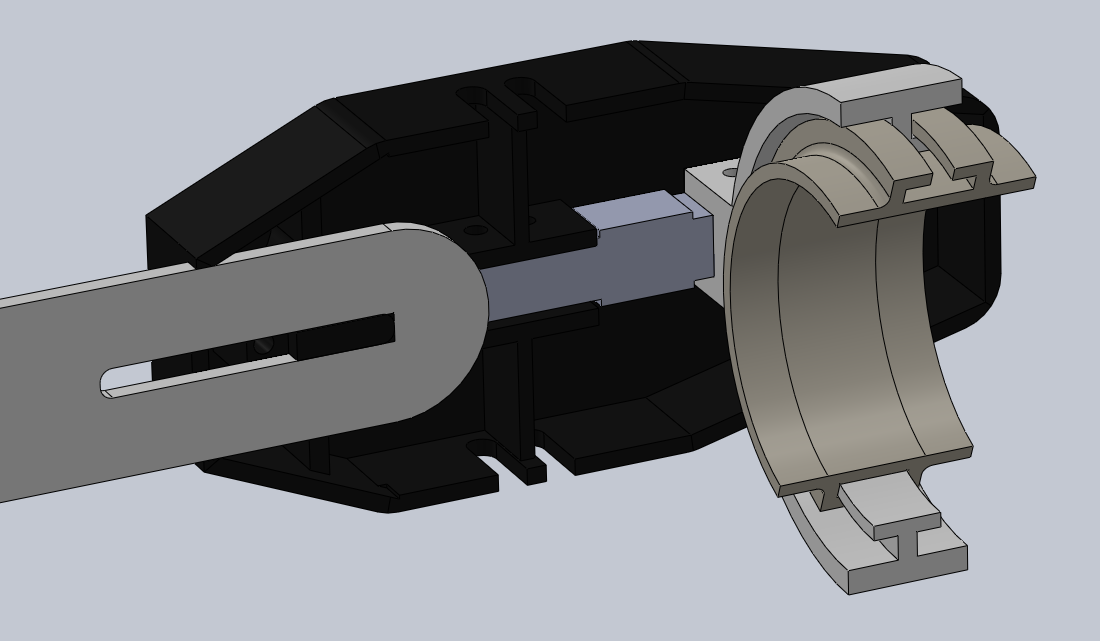
- CAD design — full SolidWorks models for each generation; assemblies, drawings, tolerance analysis
- Adjustability — sliding and locking mechanisms to fit users of different arm lengths and segment proportions
- Prototyping — 3D-printed structural parts, machined metal components; assembly and mechanical validation
Key Results
- Complete structural redesign from generation 1 to generation 3
- Significant reduction in joint misalignment loads measured on participants
- Increased workspace coverage and kinematic compatibility
- Platform validated on participants from the 5th to 95th anthropometric percentile
Technologies
SolidWorks · 3D printing · Kinematics · Workspace analysis · Mechanical prototyping